 My Favourites

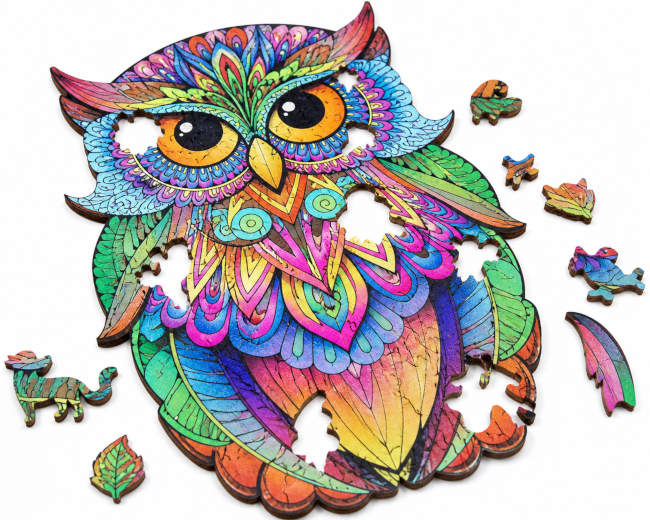
Wooden puzzles have made a genuine comeback, and it is easy to see why. They offer something screens simply cannot: tactile satisfaction, focused attention, and a finished result you can actually feel proud of. But not every wooden puzzle deserves a place in your home or on your gift list. Before you spend your money with a UK online retailer, there are several things worth knowing. From wood quality to piece count to puzzle type, the right choice depends on more than just a pretty image on the box.
Why Wooden Puzzles Are Worth the Investment
A cardboard puzzle will get you through an afternoon. A well-made wooden puzzle will last years, hold its shape, and still look sharp enough to frame. That is the core difference, and it is worth paying for.
High-quality wooden puzzles from UK makers and retailers tend to use materials that hold up to repeated use. The pieces lock together more satisfyingly, the cut lines stay precise, and the artwork does not peel or fade after a single assembly. For families with young children, this durability matters even more, since wooden pieces survive the kind of handling that destroys cardboard versions within weeks.
Beyond durability, there is a cognitive and emotional value here. Research consistently links jigsaw puzzles to improved spatial reasoning, concentration, and stress reduction. Wooden puzzles, specifically, add a sensory element that paper-based alternatives lack. The weight of a wooden piece, the sound it makes as it clicks into place, the feel of a smooth laser-cut edge: these details turn a passive activity into something genuinely absorbing.
For adults, this makes wooden puzzles an excellent way to decompress. For children, they support fine motor development and problem-solving instincts. Either way, the investment holds its value long after the first solve.
How to Assess Wood Quality Before You Buy
Not all wooden puzzles are made from the same materials, and the difference in quality between a budget option and a well-crafted one is immediately obvious once you hold both in your hands. The problem is, you are shopping online, so you need to know what to look for in a product listing before anything arrives at your door.
Start with the material specification. Look for puzzles made from birch plywood or basswood. These materials offer a clean cut, consistent thickness, and a surface that holds printed colour well. Avoid listings that describe the material only as “wood” or “MDF board,” as these are often signs of lower-grade construction that leads to warped pieces or rough edges.
Next, check the cut method. Laser-cut puzzles produce sharp, clean edges and interlocking pieces that fit properly without force. Some cheaper options use die-cut processes that leave rough edges or pieces that do not align well. A product listing that specifies laser cutting is a good sign.
Also look at the piece thickness. Anything under 3mm tends to feel flimsy and is more prone to bending. Puzzles in the 4mm to 5mm range feel solid and are much more satisfying to handle.
What to Look for in UK-Made vs. Imported Wooden Puzzles
UK-made wooden puzzles generally follow stricter quality and safety standards, particularly for products aimed at children. You are more likely to find detailed material disclosures, accurate age guidance, and non-toxic finishes on domestically produced options. Imported puzzles can be excellent, but the quality gap between the best and worst options is considerably wider.
For imported puzzles, look for CE or UKCA safety markings, clear country of origin details, and customer reviews that specifically mention piece quality and fit. Do not rely on attractive product photography alone, since images rarely show how a piece feels or whether it warps after a few uses.
Choosing the Right Complexity and Piece Count
Piece count is the most visible indicator of difficulty, but it is not the only one. A 200-piece puzzle with very similar colours and no clear focal point can be harder than a 500-piece puzzle with strong contrast and defined sections. So, rather than choosing based on numbers alone, think about who will solve the puzzle and what the experience should feel like.
For children aged three to six, puzzles with fewer than 30 oversized pieces are ideal. The pieces need to be large enough to handle safely and distinct enough to place without frustration. For older children between seven and twelve, a range of 100 to 300 pieces offers a satisfying challenge without becoming discouraging.
Adults who are new to wooden puzzles often do well starting around 300 to 500 pieces. Experienced solvers may prefer 1,000 pieces or more. But, it is worth noting that some premium wooden puzzle makers produce 200 or 300-piece versions with uniquely shaped pieces, whimsy cuts, or irregular borders that make them far more complex than the piece count suggests.
Always check the finished puzzle dimensions too. A 500-piece wooden puzzle is larger than you might expect, and you need a clear, flat surface big enough to work on comfortably.
Understanding Puzzle Types and What Suits You
Wooden puzzles are not all built the same way, and the type you choose has a direct effect on your experience. The most common format is the traditional interlocking jigsaw, where each piece connects to its neighbours through shaped tabs and blanks. This is the format most people are familiar with, and it works well across all age groups.
Beyond the standard jigsaw, there are a few other types worth knowing about. 3D wooden puzzles require you to build a structure, model, or object rather than a flat image. These are popular with teenagers and adults who prefer a more hands-on, architectural challenge. The finished result also doubles as a display piece.
There are also shaped or silhouette puzzles, where the overall outline of the puzzle forms an image rather than a rectangular frame. Animals, maps, and landmark shapes are common in this format. These tend to appeal to children and collectors alike.
For a more demanding experience, some makers offer puzzles with irregular, non-standard piece shapes, double-sided artwork, or no reference image on the box. These formats require considerably more patience and lateral thinking, and they are best suited to solvers who already enjoy the process rather than just the outcome.
Think about whether you want a puzzle to relax with, to challenge yourself, or to share with others. Each type serves a different purpose.
Buying Wooden Puzzles as Gifts: Matching the Puzzle to the Person
A wooden puzzle can be a genuinely thoughtful gift, but only if it fits the person receiving it. A puzzle that is too easy feels dismissive. One that is too hard becomes a source of frustration rather than enjoyment. Getting the match right requires a bit of thought about the recipient’s age, interests, and how they like to spend their time.
For young children, prioritise safety and simplicity. Look for puzzles with large, rounded pieces, non-toxic finishes, and subject matter they already love, such as animals, vehicles, or familiar characters. For older children and teenagers, interest-led themes work well. A puzzle featuring a favourite city, a space map, or a detailed natural scene will hold their attention far longer than a generic landscape.
For adults, consider the experience as much as the image. A beautifully illustrated puzzle with a satisfying piece count and a quality wooden finish makes a far better impression than a standard cardboard version in a similar price range. Personalised wooden puzzles, where a custom photograph or design is laser-cut into the pieces, are also available from several UK online retailers and offer a genuinely unique gift option.
If you are unsure about difficulty level, it is usually better to go slightly easier. A puzzle that gets completed brings a sense of achievement. One that never gets finished ends up in a drawer.
Conclusion
Buying wooden puzzles online does not have to be a guessing game. Focus on material quality, cut precision, piece count, and puzzle type, and you will find options worth your time and money. Whether you are buying for yourself or as a gift, the best wooden puzzles reward patience with a genuinely satisfying experience. Take the time to choose well, and the result will speak for itself.




Speak Your Mind