 My Favourites

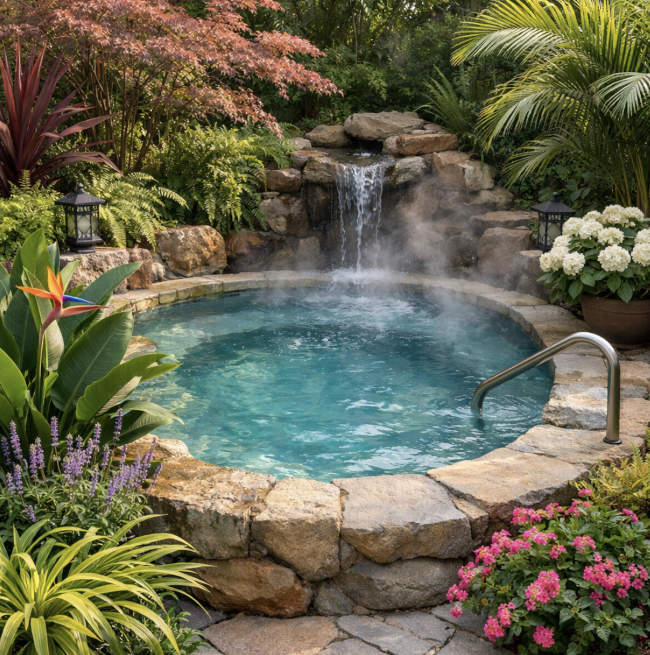
Spa pools change how an outdoor space behaves. They introduce steam, warmth, moisture, and movement into areas that were once just lawn or paving.
The plants placed nearby don’t get to live passively; they participate. Leaves catch mist, roots adjust to warmth, and visual weight matters more because the eye keeps returning to the water. Choosing plants for spa pools is not about decoration alone. It’s about balance between resilience, atmosphere, and restraint.
Understanding the Microclimate Around Spa Pools
Before any plant is chosen, the environment created by spa pools needs to be understood. This space runs on different rules than the rest of the garden. Heat rises. Moisture lingers. Surfaces stay warmer longer into the evening. Plants that thrive here tend to share certain quiet strengths.
Steam drifts upward and outward, settling on nearby leaves and soil. Some plants welcome this. Others rot slowly from it. The goal is not lushness at all costs, but stability that still looks intentional.
Heat, Humidity, and Root Zones
Roots near spa pools experience warmth well beyond seasonal averages. Soil dries unevenly. A plant that loves damp leaves may still struggle if its roots stay warm overnight. Deep-rooting species handle this best, as they draw stability from cooler soil layers below.
Mulching plays a role here, buffering soil temperature and slowing moisture loss. Organic mulch also prevents splashback from spa pools turning lower leaves into muddy targets.
Maintenance as a Design Tool
Low-maintenance does not mean low-impact. Around spa pools, maintenance decisions shape the entire experience. Plants that drop constant debris into the water create friction instead of calm. Species with clean leaf habits and predictable growth patterns reduce daily upkeep without sacrificing beauty.
Pruning schedules matter too. Aggressive growers demand attention at the wrong moments, often right when the spa is meant to be enjoyed.
Plants That Create Calm Without Blocking Space
Spa pools benefit from enclosure, but not heaviness. The plants that work best frame the water without overpowering it. Vertical interest, filtered views, and soft movement build atmosphere without crowding.
This section focuses on plant types that deliver presence without pressure.
Grasses and Soft Structural Plants
Ornamental grasses perform well near spa pools. They handle warmth, tolerate humidity, and move gently in response to air currents created by rising steam. Their root systems are typically forgiving, and their debris load stays manageable.
Plants like lomandra, carex, and miscanthus provide shape without bulk. They soften edges, blur boundaries, and allow light to pass through rather than blocking it.
Evergreen Anchors With Controlled Growth
Evergreen shrubs earn their place by staying predictable. Boxwood, viburnum, and certain dwarf pittosporums keep their form year-round without aggressive spread. When placed thoughtfully, they act as visual anchors that make spa pools feel intentional rather than temporary.
Spacing matters more than density. Plants should be allowed to exist individually, not forced into competition for space and light.
How Different Parts of the World Design Around Spa Pools
Climate influences plant choice, but cultural habits influence how spa pools are integrated into daily life. Looking across regions reveals patterns that go beyond weather charts. Each place emphasizes a different relationship between water, plants, and people.
New Zealand: Native Calm and Integrated Design
In New Zealand, spa pools often sit close to the home rather than being pushed to the far edge of the yard. Design favours flow between indoor and outdoor spaces, with decks, paving, and planting all working together instead of competing for attention.
Native species dominate the landscape choices, valued for durability, texture, and an ability to handle moisture without constant intervention.
Ferns, flax, and hebes appear frequently, framing spa pools with softness while maintaining structure year-round. The spa itself remains the focal point. Providers like Spa World have helped shape this approach by emphasizing spa pool designs that feel like permanent parts of the home environment, encouraging surrounding spaces to be designed with equal intention.
Here, plants don’t steal the spotlight. They support the spa pool’s presence, offering privacy, calm, and balance. The result is a setting that feels settled and usable across seasons—subtle, practical, and quietly refined.
Mediterranean Regions: Drought Tolerance Meets Drama
Around the Mediterranean, spa pools share space with stone, sun, and restraint. Plants work harder visually because fewer of them are used. Olive trees, lavender, rosemary, and agave bring scent and texture without demanding constant water.
These plants thrive near spa pools due to their tolerance for warmth and reflective heat. Their foliage stays clean, and their growth patterns remain controlled. The contrast between smooth water and rugged plant texture becomes the design statement.
North America: Layered Planting and Seasonal Interest
In many parts of North America, spa pools sit within larger backyard landscapes. Planting tends to layer height and colour, creating visual depth around the water. Perennials mix with shrubs, and seasonal change is welcomed rather than avoided.
Hostas, hydrangeas, and ornamental grasses coexist with evergreens to ensure spa pools feel relevant across seasons. The key difference here is adaptability. Plants are chosen not just for survival, but for how they transform the spa experience from summer through winter.
Designing for Privacy Without Closing In
Spa pools invite stillness. That stillness breaks down when the space feels exposed. Privacy planting solves this problem when handled with care. Walls of green should protect, not suffocate.
The best privacy solutions use layers, not barriers.
Vertical Screens That Breathe
Climbing plants trained on trellises provide screening without bulk. Jasmine, star creeper, and climbing fig offer coverage while allowing air and light to pass through. This keeps the area comfortable, even when steam rises heavily from the spa pool.
These plants also shift throughout the year, adding subtle variation without demanding redesign.
Trees as Soft Boundaries
Small trees placed strategically can shield sightlines without dominating the space. Species with open canopies work best, allowing dappled light to reach the spa pool while still creating a sense of enclosure.
Placement matters more than quantity. One well-positioned tree often does more than a row planted too closely together.
Soil, Drainage, and Long-Term Success
Plants around spa pools do not get a second chance. Poor soil preparation leads to stress that shows quickly in such a demanding environment. Drainage must handle splash, rainfall, and condensation without pooling around roots.
Amending soil before planting is not optional here. Compost improves structure, while grit or sand aids drainage where needed. Raised planters can also help regulate root conditions while adding architectural interest.
Irrigation Without Overwatering
Spa pool areas already deal with moisture. Irrigation systems must account for this or risk oversaturating plants. Drip systems outperform sprinklers, delivering water directly to roots without soaking foliage unnecessarily.
Manual watering often works best in smaller spaces, allowing adjustments based on real conditions rather than preset schedules.
Fertilization With Restraint
Fast growth creates mess. Slow, steady development keeps plants manageable. Fertilizers should be used sparingly, favoring organic options that release nutrients gradually. The goal is health, not speed.
Seasonal Changes and Keeping the Space Intentional
Spa pools don’t shut down with the seasons. The surrounding plants should reflect that continuity. Choosing species that maintain structure through colder months keeps the space inviting year-round.
Winter interest comes from form, not flowers. Bark texture, leaf shape, and evergreen mass matter more once blooms fade.
Autumn cleanup should be gentle, not aggressive. Over-pruning before winter exposes plants to stress at the exact moment they need protection.
A Living Frame for Still Water
Plants around spa pools perform a quiet job. They absorb sound, soften light, and slow movement. When chosen well, they disappear into the experience rather than demanding attention.
The most successful spa pool landscapes feel inevitable, as if the plants and water always belonged together. That effect comes from patience, restraint, and understanding how living elements respond to heat, humidity, and time.
Design here is not about trends. It’s about creating a place that feels steady, calm, and capable of aging well alongside the people who use it.




Speak Your Mind