 My Favourites


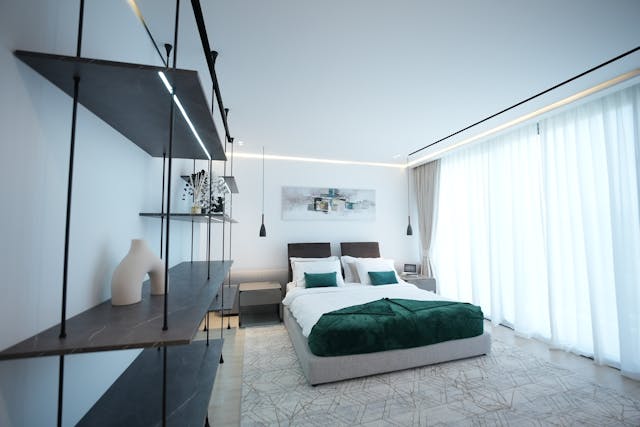
The city has developed a strong understanding of how people actually live inside their homes. Not just how they arrive, work or entertain, but how they rest, withdraw and exist without being observed.
This balance between visibility and retreat didn’t happen by accident. It’s built into layouts, zoning, materials and expectations. To understand it, you have to look past the skyline and into the everyday spaces where life slows down.
Space in Dubai Is Treated as a Resource, Not a Luxury
Before talking about privacy or rest, it’s important to understand how Dubai treats space itself. Space here isn’t something to fill aggressively. It’s something to allocate carefully. That philosophy shows up in both large-scale planning and interior decisions.
In many parts of the world, density forces compromise. In Dubai, space is used as a stabilizer.
Homes are designed around separation, not compression
Many residential layouts prioritize clear divisions between social and private zones. And it’s all according to the plan. Living areas are generous, but bedrooms remain tucked away, buffered by corridors or secondary spaces. Kitchens often sit slightly apart rather than bleeding into everything else.
This separation allows multiple rhythms to exist at once. Someone can host guests while someone else rests. Children can play without overtaking the entire home. The architecture supports coexistence without constant negotiation.
Outdoor space is intentional, not leftover
Balconies, terraces, courtyards, and private gardens aren’t treated as afterthoughts. Even in vertical living, outdoor areas are framed as extensions of interior life rather than decorative extras.
That matters in a climate where indoor-outdoor transitions are carefully controlled. Shaded terraces, recessed balconies, and screened outdoor rooms allow people to be outside without exposure. Privacy and openness coexist instead of competing.
Privacy Is Built Into the Structure, Not Added Later
Privacy in Dubai is not achieved through heavy curtains or high walls alone. It’s embedded into how buildings face each other, how windows align, and how circulation works within homes.
This approach reflects cultural expectations, but it also serves a broader audience increasingly aware of overstimulation and visibility fatigue.
Orientation reduces visual overlap
Residential developments often consider sightlines carefully. Windows don’t stare directly into neighboring units. Balconies are staggered or angled. Landscaping is used to soften views rather than block them completely.
The result is a sense of personal territory even in dense environments. People feel observed less often, which subtly lowers stress.
Internal privacy matters as much as external
Inside the home, privacy continues. En-suite bathrooms, walk-in wardrobes, and buffer zones between rooms allow individuals to retreat without isolating themselves entirely.
This is especially noticeable in larger apartments and villas, where personal space is treated as essential rather than indulgent.
Rest Is Considered a Design Requirement
Rest in Dubai isn’t left to chance. It’s supported by materials, acoustics, and spatial logic. Homes are designed to absorb sound, manage light, and reduce friction.
This focus becomes clear when comparing how bedrooms, bathrooms, and quiet rooms are treated.
Bedrooms are insulated from activity
Master bedrooms are rarely placed directly off living rooms or kitchens. They sit deeper within the floor plan, often with their own mini-corridors or vestibules. This reduces noise transfer and psychological intrusion.
Blackout-ready window systems, controlled lighting, and thicker walls reinforce the idea that rest deserves its own infrastructure.
Bathrooms function as recovery spaces
Bathrooms in Dubai homes often extend beyond utility. Larger showers, soaking tubs, and separate wet and dry zones create environments designed for decompression.
This reflects a broader understanding that rest doesn’t begin only in bed. It begins with slowing down beforehand.
How the Market Reflects These Priorities
These design choices are not limited to high-end developments. They influence buyer expectations across price points. People moving to Dubai often adjust their standards quickly once they experience how space and privacy are handled.
This is visible in how listings are marketed and evaluated.
In the first half of a property search, especially when browsing properties for sale in Dubai, descriptions frequently highlight layout logic, privacy, and flow alongside finishes and amenities. Buyers ask about noise, orientation, and separation as often as they ask about square footage.
That shift in priorities says a lot about what the city gets right.
Layout clarity often outweighs size
A well-zoned 1,200-square-foot apartment can feel more comfortable than a larger but poorly divided space. Dubai’s market understands this. Floor plans are studied closely, not just admired.
Buyers look for homes that support daily routines rather than interrupt them.
Privacy increases perceived value
Homes that offer visual and acoustic privacy hold value more consistently. This isn’t about luxury branding. It’s about livability. Developments that respect personal space age better in both reputation and demand.
Privacy becomes a form of durability.
The Role of Community Planning
Beyond individual homes, entire communities are structured to support rest and retreat. Roads, green spaces, and amenities are arranged to reduce unnecessary intrusion.
This macro-level planning reinforces what happens at the micro level inside homes.
Residential zones buffer against noise
Many neighborhoods place commercial activity at the edges rather than the center. Residential streets remain quieter. Traffic flows around living spaces instead of through them.
This separation helps maintain calm without isolating residents from services.
Shared amenities respect personal boundaries
Pools, gyms, and communal spaces are designed with spacing and visibility in mind. People can participate without feeling crowded. Usage feels optional, not imposed.
This respects different comfort levels without fragmenting community.
Cultural Sensitivity Without Exclusion
Dubai’s approach to privacy is often attributed solely to cultural norms, but that explanation is incomplete. What makes the system work is adaptability. The design principles translate across cultures because they address universal needs.
Rest, privacy, and space resonate regardless of background.
Flexibility supports diverse lifestyles
Homes accommodate extended families, individuals, remote workers, and frequent travelers without forcing a single mode of living. Rooms can shift purpose. Spaces can open or close as needed.
This flexibility reduces friction over time.
Privacy doesn’t eliminate connection
Importantly, privacy in Dubai doesn’t mean isolation. Social spaces remain generous. Entertaining is encouraged. What changes is the ability to disengage afterward.
That balance is rare and valuable.
Long-Term Impact on Wellbeing
Living in spaces that respect rest and privacy affects people gradually. Stress levels adjust. Routines stabilize. Home becomes a place to recover, not just function.
This has long-term implications that extend beyond aesthetics.
Better rest supports productivity
People who sleep well and feel mentally protected perform better in work and relationships. Dubai’s residential design supports that quietly, without branding it as wellness.
The effect compounds over time.
Space allows life to expand naturally
When homes aren’t stretched to their limits, life has room to change. New habits fit. Families grow. Work shifts. Space absorbs those changes instead of resisting them.
That adaptability reduces the need for constant relocation.
Why These Principles Matter Beyond Dubai
Dubai’s success in this area offers lessons for other cities grappling with density and demand. Rest and privacy don’t require sacrificing vibrancy. They require intention.
The city demonstrates that growth doesn’t have to mean compression, and luxury doesn’t have to mean exposure.
By treating space as a tool for wellbeing rather than excess, Dubai sets a standard that feels increasingly relevant. As more people seek homes that support recovery as much as ambition, these design priorities move from niche to necessary.
Dubai gets this right not by accident, but by design.






Speak Your Mind