 My Favourites

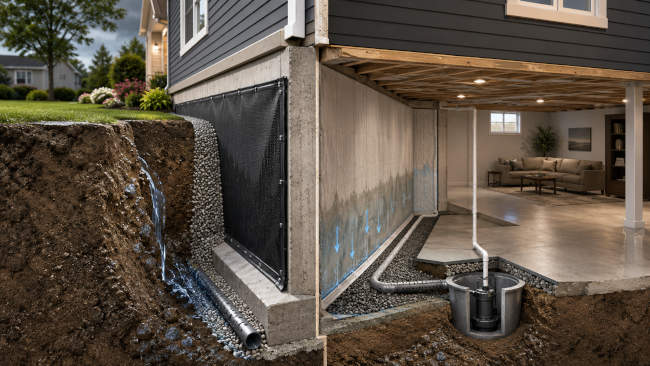
A damp or leaking basement is a homeowner’s worst nightmare. Beyond compromising the structural integrity of your home, persistent moisture invites mold growth, ruins stored belongings, and drastically lowers indoor air quality. When faced with water intrusion, the most critical decision you will make is how to tackle the problem at its source. For most homeowners, this comes down to choosing between interior and exterior waterproofing methods. Each approach carries distinct advantages, unique challenges, and specific use cases. Understanding the differences between these two strategies is essential for protecting your property and securing long-term peace of mind.
The first step in any effective moisture control plan involves recognizing a simple truth: water follows the path of least resistance. Whether it seeps through hairline foundation cracks, pushes up through the floor via hydrostatic pressure, or pools against your walls due to poor yard drainage, the goal is to stop the flow before it causes lasting damage. Investing in professional basement waterproofing is often the most reliable way to prevent recurring issues and safeguard your home’s value. But deciding which method fits your specific situation requires a closer look at how water behaves around your foundation.
Equally important is understanding that not all water problems are identical. Some leaks are minor and highly localized, while others point to larger drainage failures across the entire property. Knowing how to stop basement leaks effectively requires a tailored approach that addresses the root cause rather than merely patching over the symptoms. Let us explore the mechanics, benefits, and drawbacks of the two primary waterproofing methods to help you make an informed and confident decision.
Understanding Exterior Basement Waterproofing
Exterior waterproofing is widely considered the most comprehensive and proactive approach to keeping a basement dry. The fundamental principle behind this method is straightforward: stop water from ever reaching the foundation walls in the first place. By creating an impermeable barrier on the outside of the home, you confront the problem at its origin rather than managing its consequences after the water has already breached your defenses.
The process typically involves excavating the soil around the entire perimeter of the foundation down to the structural footing. Once the walls are fully exposed, contractors clean them thoroughly and inspect the concrete for cracks, spalling, or other signs of damage. Any necessary structural repairs are completed before a heavy-duty waterproof membrane or specialized coating is applied to the exterior surface. This coating bridges small cracks and remains flexible enough to move with the foundation as it naturally settles over time.
In addition to the protective membrane, a critical component of exterior waterproofing is the installation of a French drain—often called a perimeter drain system—at the base of the footing. This perforated pipe collects groundwater and directs it safely away from the foundation, usually routing it to a sump pump or a gravity-fed daylight exit. Finally, the excavated trench is backfilled with a mixture of gravel and soil, then carefully graded to ensure surface water flows away from the house. When considering what to do when your home needs a refresh, addressing fundamental structural issues like exterior drainage should always take priority over cosmetic interior updates.
Pros and Cons of the Exterior Approach
The primary advantage of exterior waterproofing lies in its sheer effectiveness. It provides a robust, physical defense against hydrostatic pressure and prevents water from slowly deteriorating the foundation walls over the decades. Because the water is halted on the outside, the interior of the basement remains completely dry. This makes the exterior approach an ideal solution if you plan to finish the space and turn it into a living area, home theater, or home office without fear of future water damage.
However, this method carries significant drawbacks. The most obvious challenge is the sheer disruption it causes to your property. Excavating a deep trench around a home often destroys established landscaping, rips up patios, damages walkways, and disrupts driveways. It is an intensely labor-heavy and expensive process. Furthermore, in densely populated urban areas where homes are built very close together, there simply may not be enough clearance for the necessary excavation equipment, rendering exterior waterproofing impractical or entirely impossible.
Exploring Interior Basement Waterproofing
Interior waterproofing, frequently referred to within the industry as water management, takes a fundamentally different approach to moisture control. Rather than attempting to stop water from entering the foundation walls from the outside, this method focuses on capturing and redirecting the water once it has breached the exterior defenses. It is a highly effective, proven way to manage moisture and keep the basement floor dry without the massive disruption of exterior excavation.
The most common interior waterproofing system involves installing an interior perimeter drain. This process requires breaking up the concrete floor along the inner edges of the foundation walls to create a narrow trench. A perforated drain pipe is then laid into the trench and surrounded by washed gravel to filter out sediment. The pipe connects directly to a sump pit, where a heavy-duty sump pump actively ejects the collected water up, out, and safely away from the home’s foundation.
To address water actively seeping through the walls, contractors often install a dimpled plastic membrane or a thick vapor barrier directly against the interior foundation walls. This barrier catches any incoming moisture and directs it straight down into the newly installed perimeter drain. Once the system is fully in place, the concrete floor is patched seamlessly, leaving a clean, flat, and dry surface. Maintaining a consistently dry basement environment is also one of the most efficient ways to keep your home warm in winter, as damp air requires significantly more energy to heat than dry air.
Pros and Cons of the Interior Approach
One of the main benefits of interior waterproofing is that it is generally much less expensive and far less disruptive than exterior excavation. Your carefully curated landscaping, mature shrubs, and exterior hardscaping remain completely untouched. It is also an excellent, targeted solution for managing the specific problem of hydrostatic pressure that forces water up through the basement floor—a common issue that exterior waterproofing alone cannot always resolve.
The downside to the interior approach is that these systems do not actually prevent water from entering the foundation walls themselves. Over an extended period, continuous water intrusion can cause the concrete or masonry to slowly deteriorate from the inside out. Additionally, interior systems rely entirely on electricity. If a severe storm knocks the power out and the sump pump fails, the basement can flood very quickly. This vulnerability makes a reliable battery backup system an absolutely crucial component of any interior waterproofing strategy; it should never be overlooked or treated as an optional upgrade.
Comparing the Two Solutions Side by Side
When deciding between interior and exterior waterproofing, several overlapping factors must be carefully weighed. You need to consider the severity of the water problem, your available budget, the age and condition of your home, and the specific physical characteristics of your property. Neither solution is universally superior in every scenario; the right choice depends entirely on your unique circumstances and long-term goals for the property.
If you are dealing with severe structural damage, crumbling mortar, or persistent, heavy water pressure against the foundation walls, exterior waterproofing is often the necessary choice to halt further deterioration. It remains the only method that truly seals the foundation from the outside elements. Conversely, if your primary issue is water seeping up through the floor during heavy rains, or minor, localized wall leaks, an interior system may provide a highly effective and significantly more budget-friendly solution.
Cost remains a driving factor for most homeowners. Exterior waterproofing is generally much more expensive due to the heavy machinery required for excavation and the inevitable need to restore the landscaping and hardscaping afterward. Interior systems are typically more affordable, require less time to complete, and can be installed year-round, regardless of freezing weather or heavy rain conditions. This flexibility makes interior systems a highly practical choice for urgent, mid-winter flooding situations.
Conclusion: Making the Right Choice for Your Home
Ultimately, the best solution may not be a strict either/or decision. In many complex cases, a comprehensive approach that thoughtfully combines both interior and exterior methods provides the highest possible level of protection. For example, installing an interior drain tile system to manage upward hydrostatic pressure, while simultaneously improving the exterior soil grading and extending the roof downspouts, can effectively keep a basement bone-dry without the staggering cost of a full perimeter excavation.
Before making a final, expensive decision, it is highly recommended to consult with a professional, licensed waterproofing contractor. An experienced expert can thoroughly assess your specific situation, identify the true, underlying source of the moisture, and recommend a tailored solution that fits both your immediate needs and your long-term budget. Investing in the right waterproofing system not only protects your home’s structural integrity from silent decay but also creates a healthier, more comfortable living environment for you and your family for decades to come.





Speak Your Mind