 My Favourites

There is something very satisfying about spotting a tired old chair at a garage sale and seeing its potential straight away. Especially when you then turn what looked like junk to hundreds of other people into a standout piece that graces yours or someone else’s home.
Across New Zealand, more and more people are salvaging furniture as a way to save (or make) money, reduce waste, and add character to living spaces. All it really takes is a bit of creativity and effort.
In this post, we’ll showcase how to transform overlooked pieces into furniture you’ll be proud to display. Hopefully, it will inspire you to join the furniture salvaging revolution!
Where Can You Find Hidden Furniture Gems in New Zealand?
Before you can transform furniture, you need to know the best place to salvage it. Thankfully, there are several places across New Zealand where you can do this.
Garage sales remain one of the biggest sources of second-hand furniture at affordable prices, and on any given day there are plenty in operation. The most effective approach to unearth them is to check local community hubs like Facebook Marketplace (make sure you filter for “Garage Sale”), browse apps like Yardie, and scan the classifieds in your local community newspaper.
Elsewhere, you can also check out Neighbourly, while local auctions, op shops, and estate sales can also uncover excellent opportunities for restoring furniture.
When searching for furniture upcycling projects, it is wise to focus on the quality of the frame rather than the surface appearance. Remember that scratches, faded paint, and worn upholstery can often be fixed. Structural damage, on the other hand, is usually much more difficult and expensive to repair.
How Can You Tell if a Piece of Furniture Is Worth Saving?
Unfortunately, not every piece of furniture deserves restoration, which is why you should spend a few minutes checking its condition before committing your time, effort, and potentially money to it.
Generally speaking, you should focus your search on items with solid timber construction and sturdy joints, and that show signs of being well made. Most minor cosmetic issues are easy to address during a furniture restoration project, so try not to judge the piece by its first appearance.
That said, you should check for signs of water damage, wood rot, or major structural problems, as these repairs can quickly become costly and time-consuming.
If you’re new to DIY furniture restoration, it’s a good idea to start with simple projects, such as side tables, coffee tables, or dining chairs. These pieces are typically easier to restore, and will allow you to hone your technique and build your confidence before taking on a bigger challenge.
What Tools and Materials Do You Need for a Furniture Makeover?
Something that puts many people off performing a furniture makeover is their uncertainty about which tools and materials they will need to do the job.
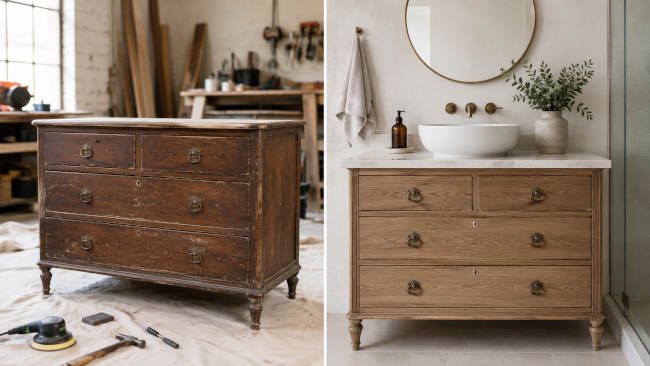
Contrary to some opinions, you don’t need a professional workshop to begin restoring old furniture. Instead, these basic tools will hold you in good standing:
- Sandpaper or an electric sander
- Paint brushes and rollers
- Wood filler
- Timber stain
- Furniture paint
- Screwdrivers
- Protective gloves
- Drop sheets
As a general rule, many furniture makeover projects can be completed over the course of a weekend using affordable supplies from your local hardware store.
That said, if you’re working with vintage furniture, it is important to take the time needed to properly research the piece before making major changes. You’ll be surprised by how much value even a simple clean and polish can bring to a piece, without needing to completely restore it.
How Do You Safely Transport Large Furniture Finds Home?
One challenge to restoring salvaged furniture that many people overlook is how to get their latest treasure home safely. While a small bedside table might fit neatly in the boot of a car, larger items such as wardrobes, dining tables, and cabinets often require a larger vehicle.
If you don’t have access to one, ute rentals New Zealand can be a good solution. They will enable you to transport furniture without risking damage to your car or the item itself. You can even hire the vehicle for only a couple of hours to minimise the cost.
Before collecting any furniture piece, make sure you measure both the item and the available space in the vehicle. It is also important to secure everything properly with straps and protective blankets to prevent movement during transit.
Which Types of Furniture Are Best for Upcycling Projects?
Furniture pieces come in all shapes and sizes. But some lend themselves better to furniture upcycling than others. Some good options, especially for those who are new to the practice, are:
- Timber dining tables
- Bedside tables
- Bookshelves
- Cabinets
- Coffee tables
- Dressing tables
- Dining chairs
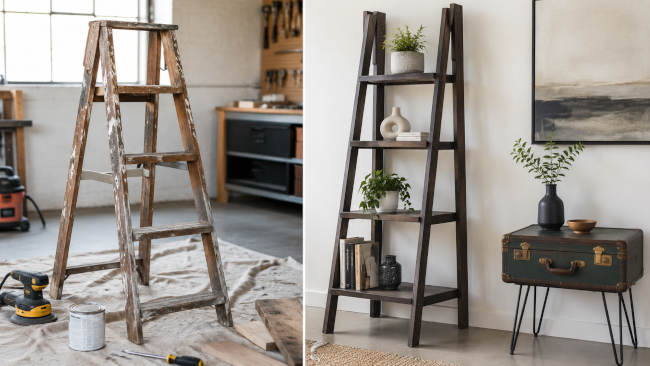
These items often have simple shapes that can be refreshed with paint, stain, or updated hardware. Having said that, refurbished furniture projects can also involve entirely changing an item’s purpose. For instance, an old ladder can become shelving, while vintage suitcases can be converted into unique side tables.
Essentially, the possibilities are limited only by your imagination!
What Are The Benefits of Salvaging Furniture
If you do commit to salvaging a piece of furniture and breathing new life into it, you can benefit from the exercise in several ways.
On a personal level, it can save you a lot of money in buying a new piece. You also get a sense of achievement when the project is completed, especially if you have restored something tired, broken, or rendered dysfunctional. And, of course, you’ll be able to use it in your home.
Salvaging and repurposing furniture is also very good for the environment. According to the DEECCW, Australia generates around 30,000 tonnes of commercial furniture waste every year. By restoring a piece, you’ll do your bit to keep valuable materials out of landfills and lower your carbon footprint by reducing the demand for “fast furniture”.





Speak Your Mind