 My Favourites

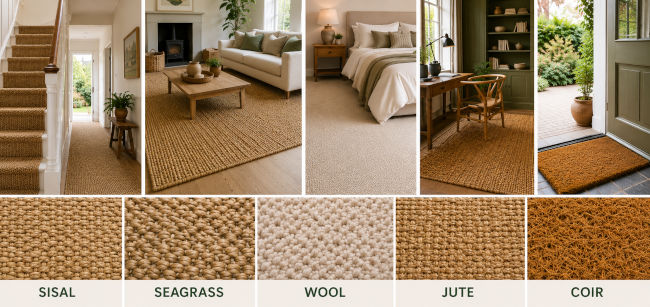
Run a thumb across a carpet sample. That contact tells you something a product page cannot. Fibre type determines how a floor performs at year three, how it feels on bare feet in January, and how often it needs professional attention to stay presentable. Natural materials behave differently from each other in ways that matter once they are installed. A fibre suited to a hallway can flatten or pill in a bedroom within two seasons. Wrong choice, wrong room. The cost of that mistake usually exceeds what the difference would have been at purchase.
Screens compress texture and shift colour. A showroom lets you press pile under actual light, compare weaves directly, and ask the questions worth asking before committing to something underfoot for years.
Natural Fibre Carpets Present Different Performance Qualities
Sisal resists crushing. Seagrass sheds surface moisture. Jute brings softness but dislikes damp. Wool insulates, recovers, and outlasts most alternatives. None of them suits every room. Each fits a specific set of conditions. Most regrets start there. So do the replacement costs nobody planned for.
Structure is what drives longevity. Tighter plant-based weaves hold shape better under repeated footfall, while softer options start compressing sooner. Wool carries lanolin, a natural oil that slows stain absorption and gives a short window to act before a spill sets. Jute pulls moisture in readily, which limits where it belongs. For homeowners choosing room by room, natural fibre carpets UK make more sense when texture, moisture, traffic, and long-term care are weighed together.
Room function guides the choice first. Hallways need structure. Bedrooms can trade some resilience for softness. Matching fibre to setting from the start avoids an early replacement that costs more than the original difference would have.
Sisal and Seagrass Perform Differently in High-Traffic Areas
Sisal is naturally rigid, which is why it holds up where softer materials flatten under repeated daily use. Original texture and colour stay intact in main stairwells and busy corridors long past the point where wool or jute would already be showing compression. Sisal does not soften underfoot over time. That is the feature, not a drawback.
Seagrass grows in saltwater estuaries and carries a waxy outer layer that slows stain absorption. Useful in areas where spills happen and deep cleaning is inconvenient. Dry indoor environments create a different problem. Below a certain level of indoor humidity, the fibre loses flexibility. Brittle patches develop near heating vents or in rooms with prolonged sun exposure. Worth knowing at purchase, not two winters after installation.
Both fibres resist dye. Colour options stay within the beige, tan, and olive range. That works well with neutral palettes. It becomes a constraint when stronger colour anchors a room. Neither belongs in a kitchen or bathroom. Moisture causes structural damage in both over time. In moderate climates with stable indoor humidity, they are attractive and dependable. In drier regions, a humidifier enters the maintenance picture.
Wool Carpets Provide Comfort and Require Maintenance
Wool outlasts most natural carpet alternatives in domestic settings. Lanolin buys time when a spill happens, slowing absorption before it sets into the pile. Consistent care extends that performance across many years. The higher upfront cost reflects that lifespan. That lifespan explains much of the price difference from synthetic.
Vacuuming regularly reduces moth risk. That surprises some buyers. Untreated wool fibre is vulnerable, and the problem arrives quietly before it becomes visible. Professional cleaning once a year keeps the pile performing at its best and extends the usable life further. Maintenance asks more than synthetic alternatives do. What it returns is genuine insulation, softness that holds rather than compresses, and appearance retention that synthetic options stop delivering well before wool reaches equivalent wear.
Bedrooms suit wool well. Low foot traffic, stable conditions, a room where thermal comfort and sound absorption matter more than abrasion resistance. Wool blends reduce the care commitment while keeping much of the natural character. Worth considering for households that want the texture and warmth without the full maintenance schedule attached.
Jute and Coir Fit Specific Room Conditions
Jute is soft underfoot. It sits at the affordable end of the natural fibre range. Dry, quiet rooms are where it belongs. Damp is its primary weakness, and not a small one. Consistent moisture exposure breaks jute fibre down within a few years. Sometimes less. In a bedroom or study with stable indoor humidity, it performs well and brings warmth without wool’s cost. Temporary installations suit it. Rooms with a planned replacement timeline suit it. Anywhere with unpredictable moisture does not.
Coir comes from coconut husks. The surface is rough. By design. At an entry point or mudroom, that coarseness scrapes soil from shoes before it reaches interior floors. A backing layer controls fibre shedding, which runs noticeably through the first months after installation. Bare feet and coir are not a pairing. It was made for a specific job.
Pets make both harder to manage. Jute and coir absorb odours quickly and resist thorough cleaning after animal accidents. Wool and sisal handle that reality better. Prolonged moisture degrades both materials structurally. Any space that does not stay consistently dry shortens their lifespan significantly.
Independent textile and carpet certifications can help narrow the choice when indoor air quality matters. Worth checking before a final decision, particularly in bedrooms and children’s rooms.
Choosing the Right Fibre for Each Room
No single natural fibre works across an entire home. Wool fits bedrooms and spaces where comfort leads. Sisal fits hallways and stairs where structure matters more than softness. Seagrass works in moderate climates with stable indoor humidity. Jute fits quiet, dry rooms on a tighter budget. Coir belongs at the door. Room-by-room decorating starts with how each space is actually used: traffic, moisture, comfort, light, and daily wear.
Understanding the room’s actual conditions clarifies the decision. Traffic levels, humidity, pets, children, whether the space prioritises warmth or durability. All of it matters before a fibre is chosen. Texture, pile height, and colour read differently under showroom lighting than on a screen. Running a hand across the weave, checking how the fibre responds to pressure, and comparing options under natural light all reduce the risk of choosing something that looks right at purchase and disappoints before the first year ends. Natural fibre carpets reward that attention at the point of selection, because the right fibre in the right room lasts longer, feels better, and needs less correcting later.





Speak Your Mind