 My Favourites

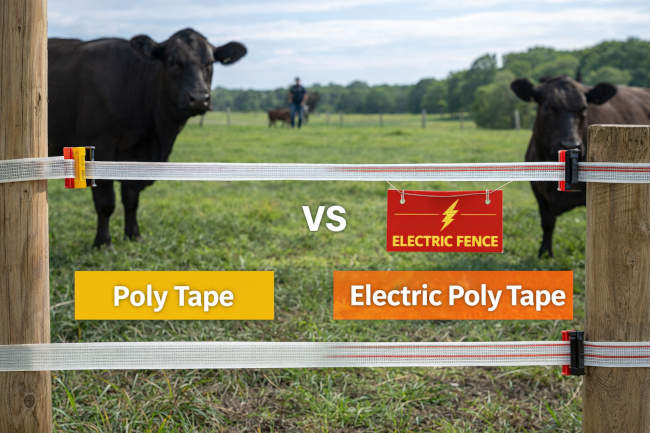
Choosing the right electric fence material affects cost, safety and how fast a farmer can set up cattle yards or paddocks. Poly tape and electric poly tape may sound similar, yet they serve different needs on the farm. Each option suits a specific goal, whether that goal focuses on budget, visibility or ease of use.
For most cattle setups, electric poly tape provides better visibility and safer boundaries, while basic poly tape often suits short-term or low-cost fencing where strength and lifespan matter less. Poly tape uses woven plastic strands with metal conductors, which makes it easy to see and simple to move. However, standard electric wire can last longer and may cost less over time, especially in permanent fences.
This guide breaks down the real differences between the two, compares upfront and long-term costs, and explains how each choice affects safety and setup. As a result, cattle owners can match the fence type to their land, herd size, and budget with clear facts rather than guesswork.
Key Differences Between Poly Tape and Electric Poly Tape
Poly tape and electric poly tape may look similar, yet they differ in strength, power transfer and how cattle respond to them. These factors affect cost, safety and day‑to‑day fence performance.
Material Composition and Durability
Standard poly tape uses woven plastic strands to form a flat strip. It often serves as a visible barrier but may not include conductive wires.
In contrast, electric fence tape blends plastic fibres with fine metal filaments such as stainless steel or copper. These metal strands carry the electric pulse across the fence line.
Wider tape, such as 12 mm or 20 mm, provides better strength and suits boundary fences. However, wide tape can strain posts in strong winds due to its surface area. Therefore, proper tension and strong insulators matter.
Basic poly tape without conductors may fray faster under sun and weather exposure. Electric versions vary in quality. Tape with more metal strands often lasts longer and resists breakage under moderate cattle pressure.
Electrical Conductivity
The key difference lies in power transfer. Standard poly tape that lacks metal wires cannot deliver an electric shock. It acts as a visual or physical guide only.
Electric poly tape includes conductive filaments woven through the plastic. These strands carry current from the energiser to the full fence length. Lower resistance tape sends a stronger pulse over longer distances.
Steel wire carries more power than tape in many cases. However, electric polytape still provides enough shock for cattle control if the energiser matches the fence length. More metal strands usually mean lower resistance and better shock strength.
Poor connections, rusted joiners or broken filaments reduce performance. Therefore, correct joins and tight tension help maintain steady voltage along the fence.
Visibility and Livestock Behaviour
Visibility plays a major role in cattle safety. Poly tape presents a wide, flat surface that cattle see more easily than thin wire.
Electric versions add both sight and shock. Cattle approach, see the bright strip, and often avoid contact after one shock. This response reduces repeat pressure on posts and strain on the fence.
However, wind can cause the tape to flap. Movement may alarm the stock or lead to wear at the connection points. Good spacing between posts helps limit sag and keeps the line straight.
High visibility also protects horses and mixed livestock. For cattle, the main benefit lies in clear boundary definition plus a sharp correction if they test the fence.
Comparing Cost, Safety, and Setup for Cattle Fencing
Cost, safety and setup all affect how well a fence works for cattle. Poly tape and electric poly tape differ in price, labour, and how they protect stock.
Initial Investment and Ongoing Costs
Standard poly tape without power costs less at the start. A producer only needs posts, insulators, and the tape itself. This makes it a low-cost choice for short-term paddocks or internal boundaries.
Electric poly tape costs more upfront. It requires a fence energiser, earth stakes, and proper connectors. In addition, it may need a battery or mains power source. These parts raise the initial spend.
However, electric poly tape often lowers long-term costs. Cattle respect an electric barrier, so they lean on it less. As a result, posts and tapes last longer. Fewer repairs mean lower maintenance costs over time.
Producers should also factor in tape quality. Wider tape with more metal strands costs more but carries power better across long runs. Cheap tape may sag or lose conductivity, which leads to extra replacement costs.
Ease of Installation and Maintenance
Both types of tape are installed with similar hardware. A producer sets posts at regular intervals and threads the tape through insulators. Wide tape stays visible and easy to tension.
Standard poly tape installs faster because it does not need an energiser or earth system. This suits small paddocks or temporary breaks. It also works well in areas without easy access to power.
Electric poly tape takes more setup time. The energizer must match fence length and stock type. The earth system must sit in moist soil to work well. Poor earthing leads to weak shocks and poor control.
Maintenance differs as well. Non-electric tape needs checks for sag and breakage. Electric tape needs voltage tests, vegetation control under the fence, and regular checks on joins. However, once set up well, it requires only routine inspection.
Safety Considerations for Cattle
Wide poly tape provides good visibility. Cattle see the flat, bright strip more easily than the thin wire. This reduces the risk of animals walking into the fence at speed.
Without electricity, poly tape acts as a physical barrier only. Strong cattle may push through it, especially if feed sits on the other side. This can lead to fence damage and potential injury from loose posts or tangled tape.
Electric poly tape adds a short, sharp shock. The shock teaches cattle to avoid contact. As a result, they keep a distance from the fence rather than press against it.
For valuable stock, such as breeding cattle, this added deterrent improves control. However, the energiser must deliver consistent voltage. Low power reduces effectiveness and may lead to repeated contact, which increases stress on both cattle and fences.
Conclusion
Poly tape gives cattle high visibility and suits short runs or strip grazing, yet it costs more and needs closer post spacing. Electric polytape, as a broader and more conductive form of polywire, balances visibility with practical setup, so many producers use it for rotational paddocks and semi‑permanent fences.
Cost, land layout, and stock pressure guide the final choice; therefore, producers should match tape width and strength to fence length and wind exposure. Clear planning, correct tension, and proper energizer output matter just as much as the material itself, because good setup drives both safety and performance.





Speak Your Mind